Return to Home
Marketing Attribution in Cookieless 2026: Navigating the New Era of Data
The digital marketing landscape is in constant flux, and few changes have loomed as large as the impending deprecation of third-party cookies. As 2026 approaches, marketers worldwide are bracing for a cookieless future, prompting a critical re-evaluation of how we understand and attribute the impact of our marketing efforts. This isn’t just a technical shift; it’s a fundamental transformation in how we connect with customers, measure success, and ultimately drive growth.
For years, third-party cookies have been the bedrock of digital advertising, enabling everything from personalized ads to sophisticated tracking of user behavior across different websites. Their demise, driven by increasing privacy concerns and regulatory pressures, marks the end of an era. But while the challenge is significant, it also presents an unprecedented opportunity for innovation and a renewed focus on building deeper, more direct relationships with our audience.
Understanding Marketing Attribution: The Evolving Puzzle
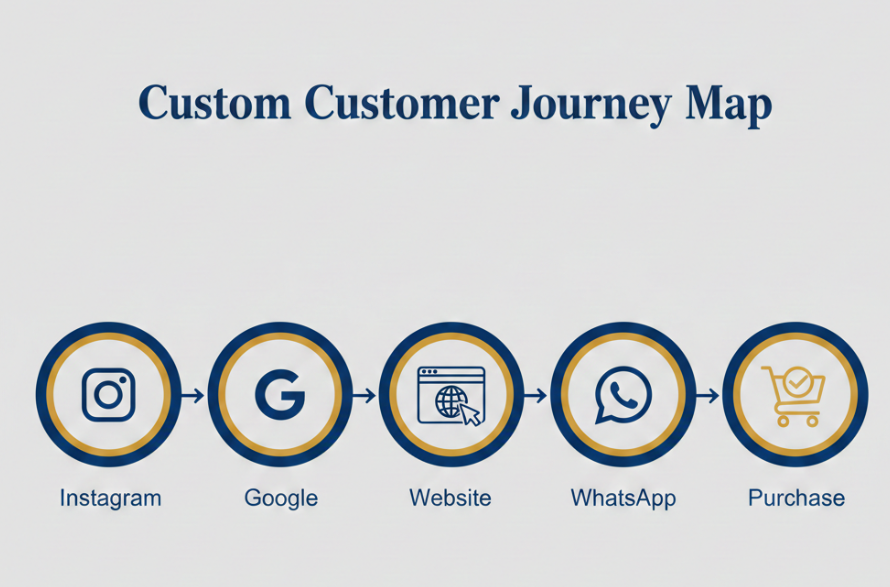
At its core, marketing attribution is the process of identifying which marketing touchpoints contribute to a customer’s conversion and assigning a value to each. In a world awash with digital interactions, a customer’s journey to purchase is rarely linear. They might discover your brand on social media, conduct a Google search, visit your website multiple times, interact with an email campaign, and even engage through a messaging app before making a purchase.
Consider this example of a modern customer journey:
Before the cookieless era, marketers heavily relied on third-party cookies to stitch together these disparate touchpoints. These tiny pieces of code, placed by domains other than the one the user was visiting, allowed advertisers to follow users across the web, collecting data on their browsing habits and interests. This enabled a relatively straightforward (albeit often opaque) way to attribute conversions.
However, the “before” picture was often characterized by scattered tracking and a reliance on external data sources. The “now” demands a more integrated and privacy-centric approach.
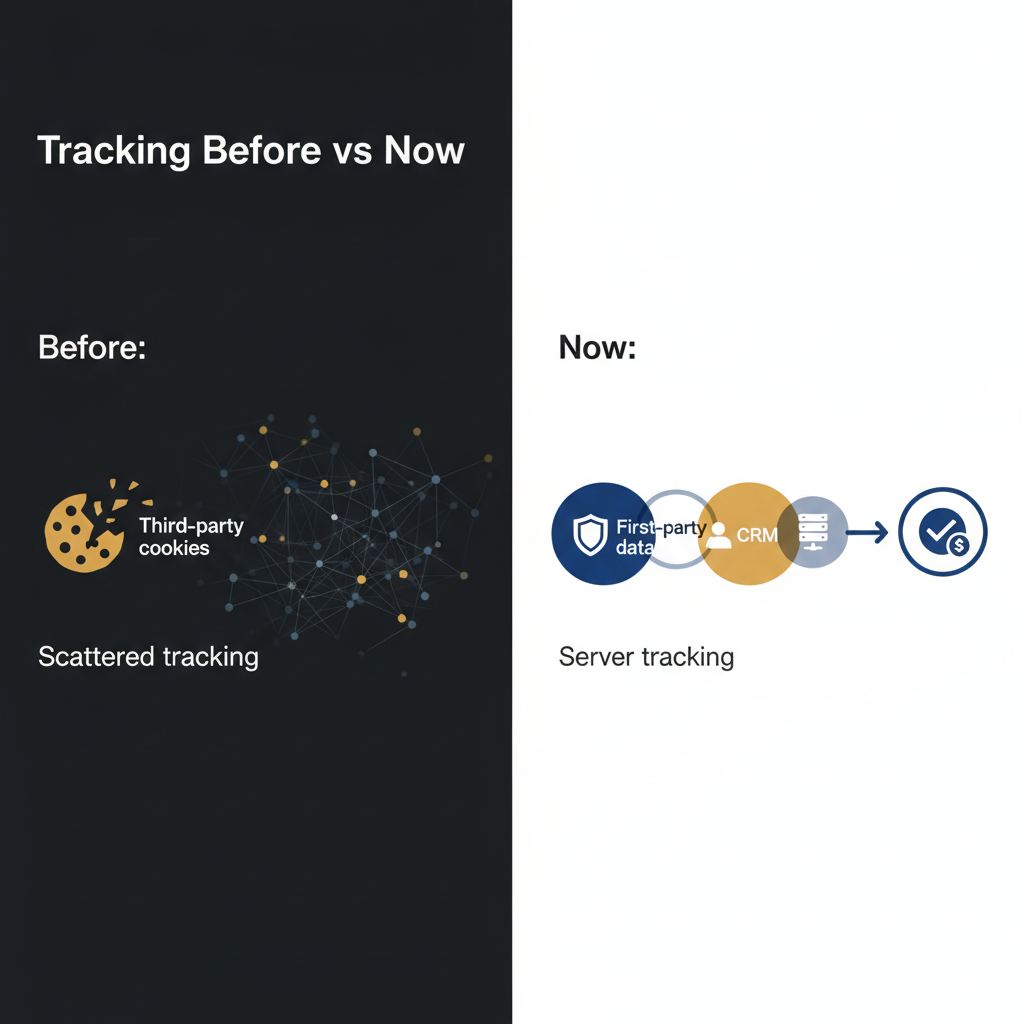
The Rise of First-Party Data and Server-Side Tracking
The key to thriving in a cookieless world lies in a strategic shift towards first-party data and advanced tracking methodologies.
First-Party Data: Data you collect directly from your customers with their consent. It includes information gathered from your website, CRM systems, email subscriptions, loyalty programs, and direct interactions. First-party data is inherently more valuable because it’s accurate, relevant, and collected with explicit permission, fostering trust with your audience.
Server-Side Tracking: Instead of relying solely on client-side (browser-based) cookies, server-side tracking involves sending data directly from your server to your analytics and advertising platforms. This offers several advantages:
-
- Enhanced Privacy: Less data is exposed client-side, reducing reliance on browser-level tracking mechanisms.
-
- Improved Accuracy: It can be more resilient to ad blockers and browser restrictions.
-
- Greater Control: You have more control over the data you send and how it’s processed.
Adapting Attribution Models for the Future
The deprecation of third-party cookies will significantly impact traditional last-click attribution models, which disproportionately credit the final touchpoint before a conversion. While simple, this model often fails to paint a complete picture of the customer journey.
In the cookieless era, multi-touch attribution (MTA) models become even more critical. MTA acknowledges that multiple interactions contribute to a conversion and attempts to distribute credit across all influential touchpoints. 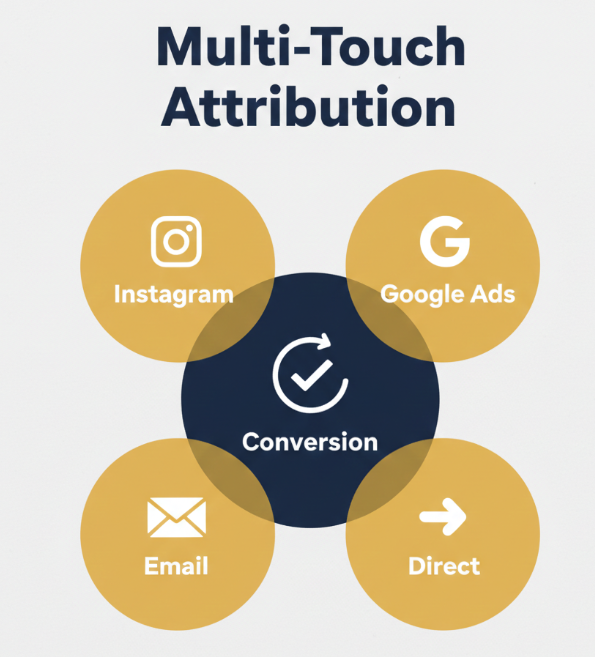
Strategies for a Cookieless Attribution Future
Embracing the cookieless future requires a proactive, multifaceted approach. Here are key strategies to implement:
Prioritize First-Party Data Collection:
- Direct Relationships: Foster direct relationships with customers through loyalty programs, gated content, and personalized experiences that encourage data sharing.
- Consent Management: Implement robust consent management platforms (CMPs) to ensure transparency and compliance with privacy regulations (e.g., GDPR, CCPA).
- CRM Integration: Centralize customer data within a powerful CRM system to create a unified view of your audience.
Invest in Server-Side Tracking and Analytics:
- Google Tag Manager (Server-Side): Leverage server-side GTM to gain more control over data collection and sending, reducing reliance on browser-based tracking.
- Customer Data Platforms (CDPs): Implement CDPs to consolidate, clean, and activate first-party data across various marketing channels, creating a persistent customer profile.
- Enhanced Measurement: Explore privacy-preserving measurement solutions offered by major platforms (e.g., Google’s Enhanced Conversions) that utilize hashed first-party data.
Embrace Incremental Testing and Experimentation:
- A/B Testing: Continuously test different marketing messages, channels, and campaigns to understand their incremental impact on conversions.
- Geo-Experiments: Run experiments in specific geographic areas to isolate the impact of new marketing initiatives.
- Holdout Groups: Use holdout groups (audiences not exposed to a specific campaign) to measure the true uplift generated by your marketing efforts.
Explore Privacy-Enhancing Technologies (PETs) and Aggregated Data Solutions:
- Federated Learning: This approach allows models to be trained on decentralized datasets without directly sharing raw data, maintaining user privacy.
- Differential Privacy: Techniques that add noise to data to protect individual privacy while still allowing for meaningful analysis of trends.
- Aggregated Reporting: Expect to rely more on aggregated and modelled data from advertising platforms, rather than granular user-level tracking.
Focus on Customer Lifetime Value (CLV):
- In a world where individual tracking is harder, shifting focus to the long-term value of customers becomes even more critical.
- Attribution models should evolve not just to measure immediate conversions but also the contribution to sustained customer relationships and repeat purchases.
Conclusion: A New Era of Strategic Marketing
The cookieless future of 2026 isn’t an obstacle; it’s an evolutionary catalyst for marketing. It forces us to move beyond superficial tracking and embrace a more strategic, customer-centric approach. By prioritizing first-party data, investing in robust server-side tracking, and adopting sophisticated multi-touch attribution models, marketers can not only navigate this change but also emerge stronger.
This new era demands transparency, trust, and a deeper understanding of the customer journey, built on consented data and intelligent analysis. Those who adapt swiftly will be best positioned to unlock sustainable growth, build lasting customer relationships, and achieve a truly data-intelligent understanding of their marketing impact.
FAQ
What exactly is happening with third-party cookies?
Major web browsers, most notably Google Chrome (which will complete its deprecation by late 2024, impacting 2026 strategies), are phasing out support for third-party cookies. These cookies, set by domains other than the one you’re visiting, have been used for cross-site tracking, retargeting, and personalized advertising. Their removal is primarily driven by increasing consumer privacy demands and new data regulations.
Will first-party cookies also be deprecated?
No, first-party cookies are not being deprecated. These cookies are set by the website you are directly visiting and are essential for core website functionality, such as remembering login status, shopping cart contents, or user preferences. Marketers will increasingly rely on first-party data collected via these cookies and other direct interactions.
How will a cookieless world impact my advertising campaigns?
The biggest impact will be on precision targeting, retargeting across different sites, and accurate cross-site conversion tracking that relies on third-party cookies. Advertisers will need to shift towards first-party data strategies, contextual advertising, and privacy-enhancing technologies (PETs) provided by ad platforms to reach relevant audiences and measure campaign effectiveness.
What are Customer Data Platforms (CDPs) and why are they important now?
CDPs are systems that unify customer data from various sources (CRM, website, mobile app, etc.) into a single, comprehensive customer profile. In a cookieless world, CDPs become crucial for collecting, organizing, and activating first-party data, allowing marketers to create personalized experiences and target audiences effectively without relying on third-party cookies.
Is server-side tracking difficult to implement?
While server-side tracking requires more technical expertise than traditional client-side tracking, tools like Google Tag Manager (GTM) server-side make it more accessible. It involves setting up a cloud server (often on Google Cloud Platform) to process data before sending it to analytics and ad platforms. Many agencies and tech partners now offer implementation services for businesses.
What role will AI play in marketing attribution in 2026?
Artificial intelligence (AI) will be pivotal, especially in data-driven attribution models. AI and machine learning algorithms can analyze vast amounts of first-party data to identify complex patterns, understand customer journeys more accurately, and assign credit to marketing touchpoints more effectively than traditional rule-based models. It will help uncover insights that human analysis might miss, optimizing budget allocation.
About the Author
This article was written by Parvathy Vinod, a Kerala-based Digital Marketing Strategist and Web Designer specializing in SEO, AI-driven marketing, and conversion-focused websites & content strategy.
Learn more about my experience and projects on the About Page